SEN TUTORS : Special Education Needs Tutoring | GCSE - IGCSE Tuition |

ADHD GCSE/IGCSE Revision Help: Executive Functioning, Effective Revision, and Applying Knowledge in Exams
Bright but inconsistent? For ADHD students, GCSE/IGCSE success depends on executive functioning: effective revision systems and the ability to apply knowledge the way examiners want. Learn the 8 core study skills SEN specialists build.
James
ADHD GCSE/IGCSE Revision Help: Why Executive Functioning is Essential (and Why Application Wins Marks)
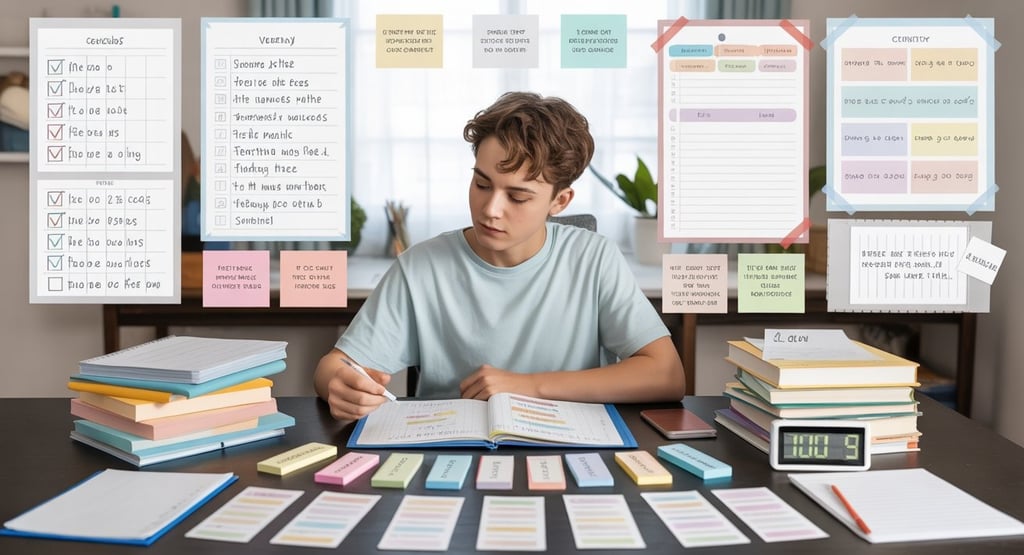
For many ADHD students, the challenge at GCSE/IGCSE is not intelligence or even understanding. It is executive functioning: the set of skills that makes revision consistent and enables a student to apply knowledge effectively under exam pressure.
This matters because GCSE and IGCSE exams are not only tests of what a student knows. They are tests of application — selecting the right method, following command words, showing working, structuring answers, and doing all of this within strict time limits. A student can ‘know the topic’ and still lose marks if they cannot execute it in the way examiners reward.
Effective support therefore has two aims: (1) build a reliable revision system (so learning sticks), and (2) build exam application and technique (so learning converts into marks).
The 8 core executive functioning skills SEN specialists build for effective study
SEN specialists often focus on these areas because they directly drive revision quality and exam performance for ADHD learners:
Time management (revision + exam pacing): Using timed blocks, realistic planning, and minutes-per-mark awareness to avoid rushing or running out of time.
Organisation (materials and routines): Making revision frictionless: tidy systems for notes, flashcards, and past papers so the student can start quickly and revise efficiently.
Task initiation (starting without procrastination): Breaking tasks into micro-starts (e.g., open paper, do Q1 only) to overcome the biggest ADHD barrier: beginning.
Sustained attention (stamina for practice): Short, focused revision blocks with planned breaks, built around active tasks rather than passive reading.
Working memory support (multi-step accuracy): Checklists, written steps, and structured methods to prevent losing the thread in Maths/Science and to reduce careless errors.
Planning and prioritising (what matters most): Turning vague goals (revise Science) into high-impact actions (active recall, targeted questions, and spaced review) based on weaknesses.
Self-monitoring (checking and improving): Building the habit of reviewing answers, using mark schemes properly, and keeping an error log so mistakes become predictable improvements.
Managing distractions and emotional regulation: Reducing phone/tech distractions and coaching calm responses to stuck moments—critical for application-style questions.
What “effective revision” actually looks like for ADHD students?
For GCSE/IGCSE, revision that works is usually:
Active recall (testing from memory, not re-reading)
Spaced repetition (revisiting topics over time)
Targeted past paper practice with review and an error log
This builds knowledge that is accessible under pressure.
Why “application” is the grade-maker?
Higher marks often come from learning how to:
Interpret command words accurately
Structure answers so examiners can award marks easily
Show working to secure method marks
Handle unfamiliar questions with a repeatable process (rather than panic)
In other words, exam success is a skill — and it can be coached.
About
Tailored educational support for unique learning needs in Singapore, UK, Malaysia, Philippines, Indonesia, Thailand, Laos, Cambodia & China.
EDUCATION FOR HEALTH UK (EFH) 2025. Copyright. All rights reserved.
Pages
Support Pages
What Next After GCSE and A Level or IB ?