




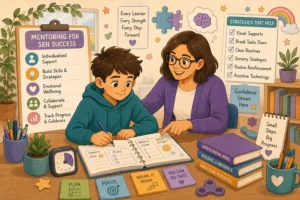


This one‑page guide explains how our bespoke approach at SENSpecialists.org helps students who are under‑achieving in GCSE / IGCSE, including those with Moderate Learning Difficulties (MLD) and other SEN profiles. It’s written for parents and carers.
Why students under‑achieve (in brief)?
- Gaps in reading, writing or numeracy make new topics harder.
- Slow processing/working memory means exams feel too fast.
- Passive study habits (rereading) instead of active practice.
- Low confidence/anxiety; difficulty getting started and staying organised.
What we do differently?
- Personalised plan built from a short diagnostic (strengths, gaps, exam‑skill needs).
- Bespoke, scaffolded worksheets that move from modelled examples → guided steps → independent practice.
- Examiner‑informed technique: how to plan answers, manage time and use access arrangements properly.
- Executive‑function coaching: planning, micro‑goals, timers and routines so study actually happens.
- Mentoring check‑ins to build motivation and reduce anxiety.
Why textbooks/revision guides aren’t a full solution?
- Assume average pace/processing; not designed for MLD or SEN needs.
- Encourage passive rereading rather than active retrieval and scaffolded practice.
- Rarely teach answer structure, timing and exam heuristics.
What progress looks like?
- Clearer, shorter steps that your child can complete in each lesson.
- Better retention from frequent low‑stakes quizzes and retrieval practice.
- Improved completion of exam questions under time limits.
- Measured grade gains in mocks/finals when access arrangements and practice are aligned.
A typical week (simple and sustainable)
- 1 × focused lesson (scaffolded worksheet; one small skill mastered).
- 1 × 10–15 min retrieval quiz or flashcards (spaced practice).
- 1 × timed mini‑task (e.g., a 10–12 min exam‑style question).
- 5‑minute mentoring check‑in: wins, one next step, plan for the week.
What parents can do this week?
- Agree a quiet study slot (20–30 mins) and a visible timer.
- Use a simple checklist: plan → practise → quick quiz → review.
- Celebrate one small win per session to build momentum.
Next step
Share your child’s subject, current grade and target. We’ll create a 8–12 week plan and a sample bespoke worksheet aligned to their needs and exam board.
SENSpecialists.org • UK‑qualified tutors • Learning design • Mentoring • Executive‑function coaching