
As parents, we naturally focus on our children’s academic milestones. However, there is a “hidden curriculum” that dictates how they navigate the world, manage stress, and build a future: Social Emotional Learning (SEL).
For children and young teens with Special Educational Needs and Disabilities (SEND) including Autism, ADHD, PDA, or Speech and Language needs SEL isn’t just an extra; it is the foundation of their well-being. At senspecialists.org, we bridge the gap between a child’s potential and their daily reality by teaching the emotional tools they need to succeed.
What is Social Emotional Learning (SEL)?
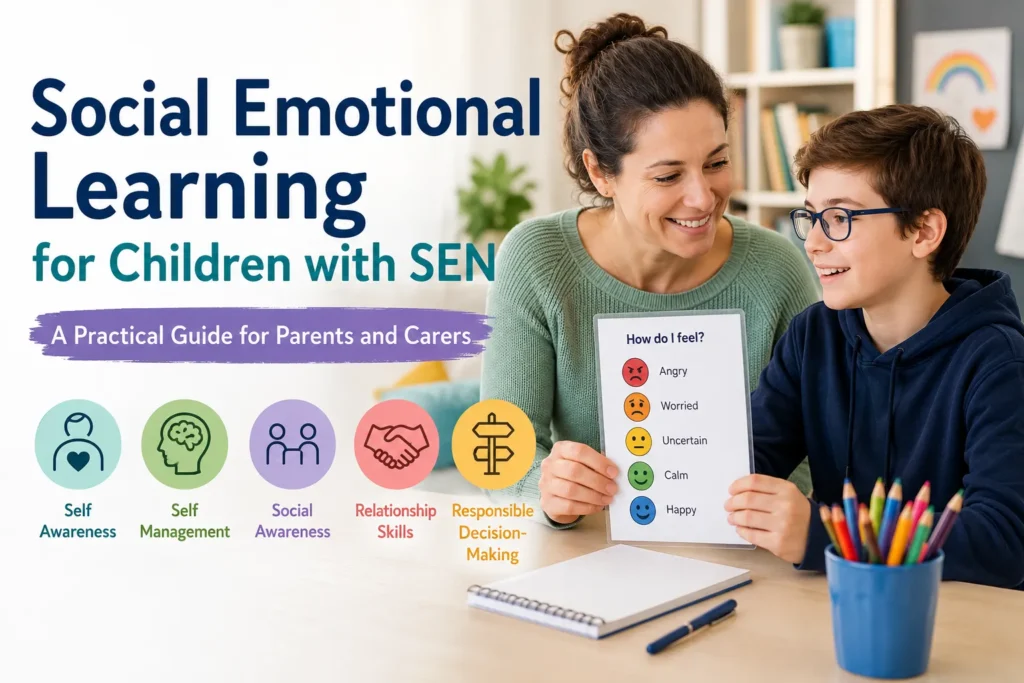
SEL is the process of developing the self-awareness, self-control, and interpersonal skills that are vital for school, work, and life success. It is often broken down into five core pillars:
- Self-Awareness: Recognising emotions and personal strengths.
- Self-Management: Regulating emotions and impulses.
- Social Awareness: Showing empathy and understanding social cues.
- Relationship Skills: Communicating clearly and resolving conflict.
- Responsible Decision-Making: Making constructive choices about personal behaviour.
For neurodivergent young people, these skills often don’t develop “naturally” through observation. They require explicit, neuro-affirming instruction that respects their unique way of processing the world.
Why SEL is Critical for the “Tween” and Young Teen Years?
As children move toward their teenage years, the social landscape becomes more complex. Friendships rely more on nuance, school pressure increases, and hormonal changes can make emotional regulation feel like an uphill battle.
For a young person with SEN, this transition can lead to:
- Increased Anxiety: Feeling “different” but not knowing how to express it.
- Social Isolation: Struggling to keep up with the fast-paced social rules of secondary school.
- School Refusal: When the emotional cost of the classroom becomes too high.
- Low Self-Esteem: Focusing on what they can’t do rather than their unique talents.
How SENspecialists.org Can Help Your Family?
We provide expert, tailored support for families in the UK and internationally, ensuring that geography is never a barrier to high-quality SEN provision. Here is how we can help:
1. Comprehensive SEL Assessments
We don’t believe in “one size fits all.” We conduct deep-dive assessments to understand your child’s specific profile. We look at their sensory processing, communication style, and emotional triggers to create a roadmap that actually works for them.
2. Personalised “Toolkits” for Home and School
We help you move past “behaviour management” and toward emotional regulation. We provide:
Visual Supports: Customised schedules and emotion thermometers.
Regulation Strategies: Practical techniques (from heavy work to breathing exercises) tailored to your child’s sensory needs.
Social Scripts: Helping young teens navigate tricky situations like group projects or online gaming etiquette.
3. International Parent Coaching
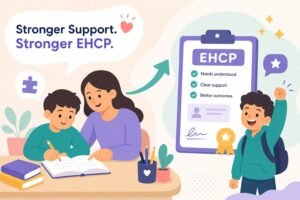
Whether you are navigating the UK’s EHCP process or seeking support within an international school system, our coaching empowers you. We provide 1:1 sessions via video call to help you advocate for your child and implement SEL strategies at the dinner table, not just in a therapy room.
4. Direct Skills Building
For young teens, we offer sessions focused on Social Competence. This isn’t about masking or acting neurotypical; it’s about understanding the social why behind interactions so they can make informed choices about how they want to engage with others.
5. Collaboration with Schools
We act as a bridge. We can review your child’s current school support (such as an IEP or SEN Support Plan) and suggest specific SEL goals that are measurable and achievable. We help teachers understand that can’t is often mistaken for won’t, shifting the school’s approach from discipline to support.
Practical Tips for Parents Today
- Validate, Don’t Fix: When your teen is overwhelmed, start with: “I can see you’re having a really hard time right now.” Validation lowers the heart rate; jumping to solutions often raises it.
- Model the “Melt-Down”: Let your child see you manage your own stress. “I’m feeling very frustrated because I’m stuck in traffic, so I’m going to take three deep breaths.”
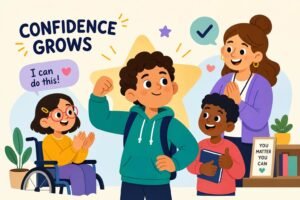
- Focus on Strengths: SEL is easier when a child feels capable. Find their island of competence—whether it’s coding, art, or animals—and use that as a base for building confidence.
Take the Next Step with SENspecialists.org
You don’t have to navigate the complexities of SEN and emotional development alone. Whether you are looking for a one-off consultation or ongoing support for your child’s journey into adolescence, we are here to help.
Ready to support your child’s emotional growth? Visit SENspecialists.org to book an initial consultation. Let’s work together to build the skills your child needs for a happy, independent future.